Friday, November 15, 2019

Oscar Wilde's "The Happy Prince"


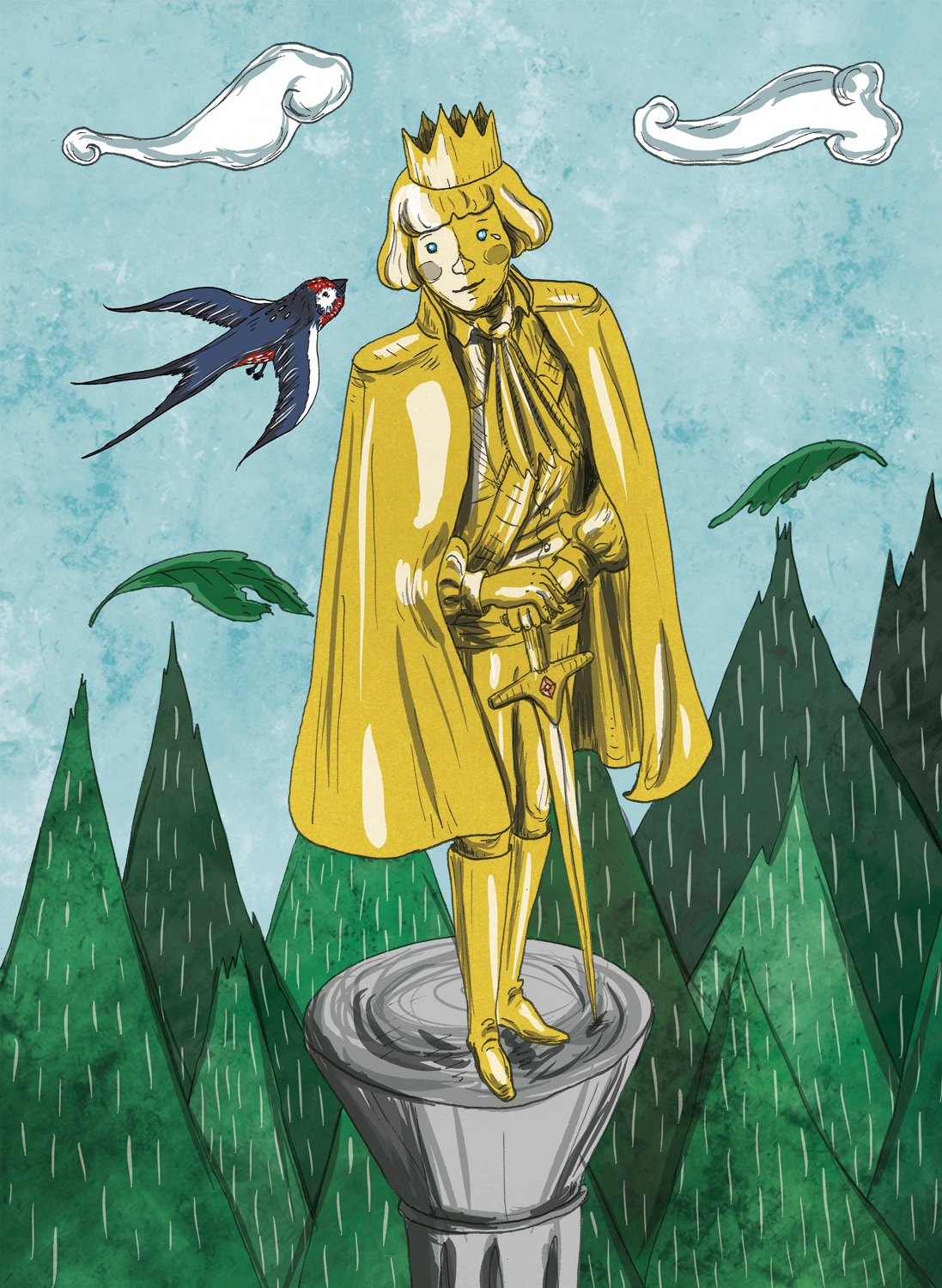
Oscar Wilde's "The Happy Prince" may perhaps be my favorite short story for children. I was first introduced to it in elementary school, where it was shown to us on film every year, and even as a child I would be moved to tears and inspired by it.

It tells the story of a beautiful statue of a prince standing on a high pedestal. He is covered head to toe in gold leaf and for his all seeing eyes he has two beautiful saphires. All is not well with the Happy Prince, for he stands over a city that is steeped in abject poverty and here he is trapped on his pedestal unable to help the very people whom he loves with all his heart. Until along flies a swallow bound for the lands of Egypt for the winter and the swallow remains behind to help

Monday, October 21, 2019

How a Fifteen Year Old Child Martyr Shows Us the Right Path


By Fr. Elias Makos

The New Martyr John who was from Gouves in Monemvasia was a child, just fifteen years old, and his memory is celebrated on October 21st. He was made worthy to be martyred for his faith in God, and in a very tragic way.

His father was an Orthodox priest from Geraki who served with much reverence in the parish of the village of his wife called Gouves, and this is where John was born.

Tuesday, October 8, 2019

How To Explain Halloween to Christian Youth


By John Sanidopoulos

When I was an eighteen year old seminarian, I was asked by a local parish to do a youth seminar on Halloween about a week before October 31st. Though I never personally had any issues with Halloween, and in fact I enjoyed it, I felt like the parish wanted me to teach the normal anti-Halloween propaganda most Christians teach about it, and I decided to use that to explain what Halloween was all about from a Christian perspective. I basically prepared the material for other youth counselors, and about fifty young people were broken up into five groups of ten and discussed the material. One of these groups was led by me.

Tuesday, September 17, 2019

Mothers and the Upbringing of Children (St. Nektarios of Aegina)

Photo of St. Nektarios in Evia from 1893

The following article titled "Mothers and the Upbringing of Children" was written in 1895 by St. Nektarios when he was the director of the Rizarios Ecclesiastical School in Athens, and it was published in the periodical Ieros Syndesmos.

The education of children must begin from infancy, so that the child’s mental faculties may, from their very first appearance, be directed right from the beginning toward the good, the gentle, the true, and may be removed from the evil, the obscene, and the false. This age can be regarded as a most immovable foundation upon which the child’s moral and intellectual formation will be built. This is why Phocylides says, "You must while he is yet a child instruct him in good works," for it is from childhood, as from a starting line, that a man sets off on the race he is to run in life. And Basil the Great declares, “The soul, while it is still easily molded and soft, while it is still like wax that is easily melted and that easily receives the impression of the shapes that are pressed upon it, must straightway and from the beginning be urged on to every exercise of virtues; so that, when the faculty of reason has come and the habit of discrimination has appeared, the soul’s course may proceed from first principles and from the impressions of piety that have been handed down to it, with the faculty of reason suggesting that which is useful and the moral character producing an ease of accomplishing it.” And who, indeed, does not acknowledge that those first impressions that have come during childhood prove indelible? Who doubts that in early childhood influences are so powerfully impressed on the child’s tender soul, that they remain vivid throughout his whole life?
Thursday, September 12, 2019

Orthodox Hierarchs Address the Youth at the Beginning of the New School Year


Orthodox Hierarchs around the world have been addressing the youth with pastoral advice at the beginning of the new school year. Among the most interesting are the following three examples with a universal message to youth:

Patriarch Daniel of Romania pointed out in a sermon that “spiritual and intellectual formation is the greatest wealth of person, a treasure no one can take away from us.”

He went on to state: "What we gather in our soul through prayer, culture, education and good deeds remains eternally in our soul."